From Personal Experience to Preventive Medicine: The Story Behind ImprintBio
Written by: Kym Vorhees Raque
All photography in this post is credited to Abdul Sharif Photography
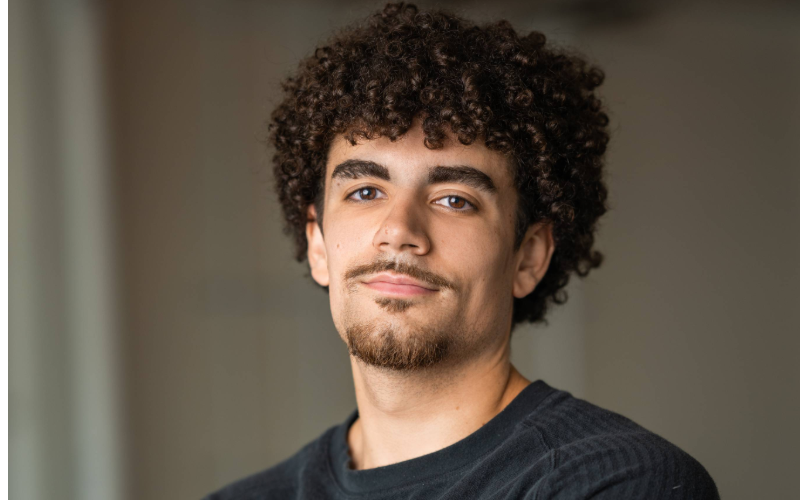
Pictured: Zach Fowler, Co-Founder of ImprintBio. Not pictured: Joseph Chen, PhD.
More than 40 million Americans suffer from Type II Diabetes. ImprintBio co-founder Zach Fowler witnessed three of his grandparents develop the disease seemingly instantly, leading him and co-founder Joseph Chen, PhD, to design breakthrough technology that provides early detection.
“Each of them experienced their diagnosis as though the disease had appeared overnight, even though we now understand that insulin resistance and metabolic dysfunction can develop for years before conventional diagnostic markers become abnormal,” said Fowler. “That experience led me to the intersection of preventive medicine and biomedical engineering. ImprintBio is working to fill that gap by making insulin continuously measurable, so that we can see disease developing rather than simply recognize it after it has arrived.”
ImprintBio is developing breakthrough biosensing technology that continuously monitors insulin in real time, enabling earlier detection of metabolic disease and providing insights beyond what current glucose monitoring alone can offer. He says the company’s goal is to complement existing continuous glucose monitoring with a second, earlier biomarker which will alert healthcare providers and patients allowing for early intervention and treatment.
“The part of the technology I am most proud of is that we’re approaching insulin monitoring from a fundamentally different direction than current biosensors,” said Fowler. “Glucose monitoring benefits from enzymatic and electrochemical sensing technologies, but those approaches do not translate directly to insulin. Our platform uses engineered synthetic receptors to recognize insulin, creating the possibility of continuous insulin measurement without relying on antibodies or enzymes. We believe this could open an entirely new layer of metabolic monitoring and, ultimately, allow clinicians to see insulin resistance developing years before a conventional diabetes diagnosis.”
Fowler says he applied to the Vogt Invention and Innovation Awards program because it offered funding and an opportunity to strengthen his company’s commercialization strategy, including developing relationships and partnerships with established continuous glucose monitoring platforms.
The Vogt Awards funding will allow ImprintBio to create more opportunities to generate and retain intellectual property as the technology matures and strengthen the company’s National Science Foundation’s Small Business Technology Transfer (NSF STTR) Phase I application and supporting data, which if won will give the company access to additional non-dilutive grant funding through the NSF’s America’s Seed Fund.
By the completion of Vogt Awards Demo Day, Fowler hopes ImprintBio will be in a stronger position for advancing its prototype, strengthening its intellectual property position, generating the validation data needed to demonstrate clinical utility, and establishing meaningful relationships with continuous glucose monitoring manufacturers.
“Personally, I hope to have grown from an engineer who developed a technology into a founder capable of successfully translating that technology into a company and, ultimately, into something that can improve how metabolic disease is detected,” he said.
Interested in learning more about ImprintBio? Register to attend Vogt Awards Demo Day on Tuesday, November 17 at the Kentucky Derby Museum.
Bringing Harmony to Performing Arts School Operations: Meet Conductly
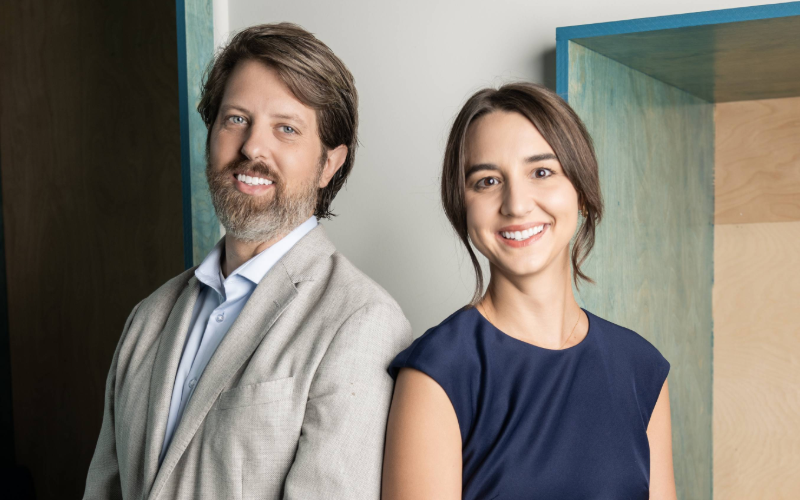
Pictured: Dustin Lyons and Amanda Lyons, Co-Founders of Conductly.
Co-founded by Amanda and Dustin Lyons, Conductly is an all-in-one platform for music and performing arts schools allowing them to manage everything from scheduling, enrollment, billing, student records and communication in one connected system. Conductly replaces the outdated patchwork of tools and systems many growing schools rely on today.
The duo says they started the company after seeing how much time music and performing arts schools spend managing the administrative work behind their programs.
“These schools play an important role in their communities, but many are still running on software that is fragmented, outdated, or simply not designed for the complexity of a growing school,” said Dustin. “We wanted to build something better. One system that connects the day-to-day operations of the school while also giving leaders the data and insights they need to understand their business, make better decisions, and grow with confidence.”
Dustin says they decided to apply for the Vogt Invention and Innovation Awards program because it provided an opportunity to build on the momentum Conductly is experiencing while gaining valuable mentorship, resources, and connections.
He said the Vogt Awards funding will help the team accelerate both product development and customer growth. They plan to invest in expanding Conductly’s AI capabilities, developing the mobile experience, and reaching more music and performing arts schools.
“The part we’re most excited about is where we’re taking the product next,” he said. “Because Conductly connects the operational data of a school, we can build AI that does more than answer questions. Our goal is for Conductly to become an active assistant that understands how a business operates, surfaces useful insights, and eventually helps carry out the administrative work itself.”
Dustin and Amanda hope to have built a stronger foundation for scaling Conductly by Vogt Awards Demo Day on November 17. They would like to have reached more music and performing arts schools and developed a more repeatable sales and onboarding process.
“We also hope to come out of the program as stronger founders, with a clearer understanding of how to turn the traction we’re seeing today into a much larger company,” said Dustin.
Interested in learning more about Conductly? Register to attend Vogt Awards Demo Day Tuesday, November 17 at the Kentucky Derby Museum.
Make Healthcare Operations Easier with One Care Portal

Pictured: Ram Bastola, Founder of One Care Portal. Photography by Abdul Sharif Photography
Medical documentation and the associated paperwork for healthcare providers have increased exponentially, forcing providers to spend valuable time completing forms instead of providing the care their patients need. Ram Bastola, Founder and CEO of One Care Portal, developed a new healthcare software platform specifically for community-based care providers, including adult day care and case management organizations, to ease this burden.
“We bring day-to-day operations, documentation, compliance, and Medicaid billing into one simple, secure platform so providers can spend less time dealing with paperwork and disconnected systems and more time focused on the people they serve,” said Bastola.
The combination of funding, mentorship, and access to Louisville’s entrepreneurial community is what influenced Bastola to apply for the Vogt Invention and Innovation Awards program. He says he recognized it as an opportunity to learn from people who have already successfully built and scaled companies and use their experiences and expertise to help him take One Care Portal to the next stage.
According to Bastola, the company will focus the majority of the Vogt Awards funding on customer acquisition, attending industry conferences, improving sales and marketing, and continuing to strengthen the software platform and its security.
“What I’m especially proud of is that One Care Portal brings workflows that are normally spread across several systems into one platform designed specifically around how these providers actually operate,” he said. “From documenting care and staying audit-ready to submitting Medicaid claims and tracking payments, we’re making complicated healthcare operations much simpler. Because I’ve experienced these problems from the provider side as well as the technology side, we’re able to build around real operational problems rather than assumptions.”
By Vogt Awards Demo Day, on November 17, he wants One Care Portal to be a stronger and more scalable business, with a clearer sales process, more customers, and a stronger foundation for future growth.
“Personally,” says Bastola, “I want to come out of the program a better founder, especially when it comes to sales, communicating our vision, and building the relationships needed to grow the company.”
Interested in learning more about One Care Portal? Register to attend Vogt Awards Demo Day Tuesday, November 17 at the Kentucky Derby Museum.